Best HWID Spoofer, How Hardware ID Spoofing Works and What to Check Before Buying
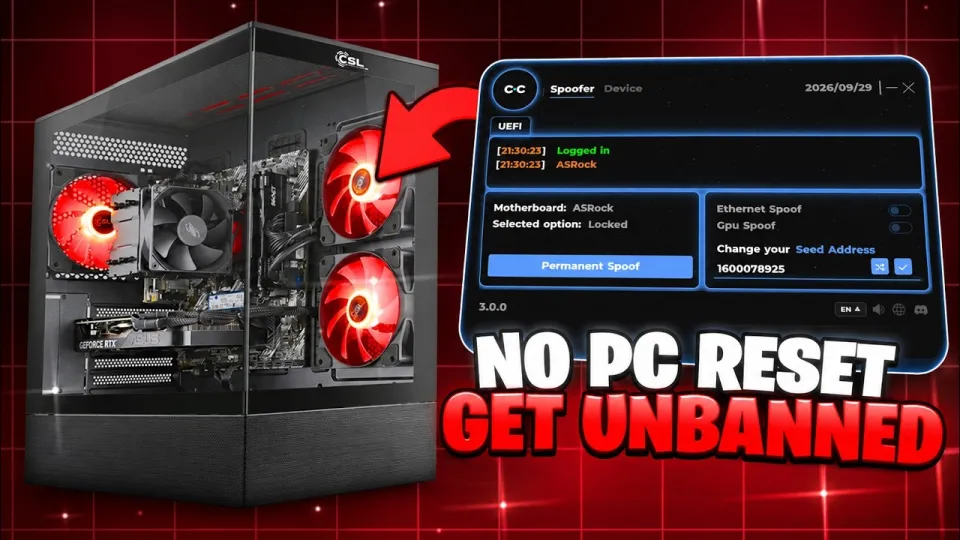
Video: The Ultimate HWID Spoofer Tutorial 2026 – Full Guide To Get Unbanned Fast
· based on the channel clixx
Key takeaways
- An HWID spoofer replaces the hardware identifiers a game or anti-cheat reads — disk serials, SMBIOS data, MAC addresses, volume IDs and registry machine GUIDs — so a flagged machine looks like a new one.
- The breakdown from clixx walks through one paid tool sold at cethcheats.cc, covering its interface, configuration options, installation and a functionality test.
- Advertised game coverage includes Fortnite, Warzone, Rust, CS2, Rainbow Six Siege, Apex Legends and Valorant.
- Spoofers are commonly split into temporary (session-only) and permanent (survives reboot) modes, and the mode must match the anti-cheat you are dealing with.
- A spoofer changes identifiers only — it does not remove a ban on the game account itself, which stays banned regardless.
The best HWID spoofer is not the one with the longest game list, but the one that changes every identifier an anti-cheat actually reads and keeps those changes stable across reboots. Tools in this category rewrite disk serials, SMBIOS and motherboard strings, MAC addresses, volume IDs and the Windows MachineGuid so that a flagged PC reports as new hardware. The breakdown from clixx examines one such paid tool, distributed through the Ceth Cheats store, from its interface and configuration options through installation and a functionality test.
What an HWID ban is and what a spoofer changes
An HWID ban blocks a machine rather than an account, which is why creating a fresh profile often fails within minutes. Anti-cheat clients build a fingerprint from several layers of the system, and a spoofer has to address each layer separately.
- Storage identifiers — the serial number reported by the drive firmware and the volume serial of each partition.
- SMBIOS and motherboard data — system UUID, baseboard serial, chassis asset tag and BIOS version strings.
- Network adapters — the MAC address of every physical and virtual interface, including the ones left behind by VPN clients.
- Windows-level IDs — the MachineGuid registry value, the computer name, the product ID and the installation timestamp.
- Peripheral and monitor data — EDID strings from displays and, in stricter setups, USB device serials.
A temporary spoofer applies these changes for the current session and reverts on reboot; a permanent spoofer writes them so they survive restarts. Neither one unbans a game account — the account ban is a separate enforcement action and stays in place.
Inside the tool shown in the clixx walkthrough
The reviewed software presents itself as an all-in-one panel rather than a single toggle, with separate modules for each identifier group. The video moves from a general overview to the feature list, then to configuration and settings, and finishes with the installation process — a structure that mirrors how these tools are usually evaluated.
What the walkthrough covers:
- the main dashboard and the individual spoofing modules;
- configuration fields for hardware ID values and cleaning options;
- system tools bundled alongside the spoofer;
- the installer and the first-run sequence;
- a compatibility list and a live functionality test.
The advertised game coverage is broad: Fortnite, Warzone, Rust, CS2, Rainbow Six Siege, Apex Legends and Valorant, plus FiveM servers. That spread matters because different anti-cheats weight identifiers differently — a tool that is reliable on one title is not automatically reliable on another.
How to set up a hardware ID spoofer safely
The order of operations decides whether a spoof holds, so treat setup as a checklist rather than a single click. Most failures traced in community threads come from skipping a step, not from the spoofer itself.
- Close the game and its launcher completely, including background services and tray icons.
- Disable or remove virtual network adapters left by VPNs and emulators — they carry their own MAC addresses and can leak the old fingerprint.
- Create a restore point before writing SMBIOS or disk serial changes, so a failed spoof does not leave the system unbootable.
- Run the spoofer as administrator and apply all modules, not just the storage one.
- Reboot if the tool uses a permanent mode, then confirm the new values with a system information reader.
- Change the Windows computer name and MachineGuid if the tool does not handle them automatically.
- Log in with a fresh account and avoid reusing the same email, phone number or payment method tied to the banned profile.
Skipping step 7 is the most common reason people conclude a spoofer "doesn't work": the hardware looks new, but the account is linked to the old one through recovery data.
Temporary vs permanent spoofing: which mode to pick
A temporary spoof is the safer choice for testing, while a permanent spoof is what most people need for a machine they intend to keep playing on. Temporary mode touches fewer system components and is easier to roll back, but it must be reapplied after every restart and can be undone by a driver update. Permanent mode writes changes at a deeper level, survives reboots and driver reinstalls, and therefore carries more risk if something goes wrong — hence the restore point. Some tools offer both under one license, and the clixx video shows the configuration screen where these modes are selected.
Red flags when choosing an HWID spoofer
Price and a long game list say little about whether a spoofer works; what matters is how it handles the identifiers that anti-cheats actually query. Be cautious with tools that promise to "unban" an account, since no spoofer can reverse an account-level ban. Avoid anything that requires disabling Windows security permanently, ships as a single unsigned executable with no version history, or has no visible support channel — the reviewed product routes support through the Ceth Discord server, which is the normal pattern for this market. A coupon code (DENYS for 5% off) is mentioned in the video description, which is typical of creator partnerships rather than a quality signal.
Links from the video
- Store and product page: https://cethcheats.cc/
- Community and support: https://discord.gg/ceth
Summary
An HWID spoofer is a system-level tool that rewrites the hardware fingerprint an anti-cheat reads, and the version reviewed by clixx covers storage serials, SMBIOS data, network adapters and Windows identifiers across Fortnite, Valorant, Rust, CS2, Warzone, Rainbow Six Siege, Apex Legends and FiveM. The practical rules are simple: back up first, spoof every layer rather than one, reboot into the new identity, and start with a clean account that shares nothing with the banned one. Remember that spoofing changes the machine, not the account ban. If you want to check the tool from the breakdown, the Ceth Cheats store is where it is sold.
Source: The Ultimate HWID Spoofer Tutorial 2026 – Full Guide To Get Unbanned Fast · Markdown version
Questions & answers
Does an HWID spoofer actually get you unbanned?
It removes the hardware block, not the account ban. After a successful spoof the machine reports as new hardware, so a fresh account can usually play, but the original account stays banned permanently. Anyone promising to restore a banned account is misrepresenting what the tool does.
Is a free HWID spoofer safe to use?
Free spoofers are usually older builds with fewer modules and no support, and some bundle unwanted software. A spoofer runs with administrator rights and edits SMBIOS and disk data, so an untrusted build can leave the system unbootable or expose it. Check for a version history, a support channel and a restore point before running anything.
Which games does the spoofer in the clixx video support?
The advertised list covers Fortnite, Warzone, Rust, CS2, Rainbow Six Siege, Apex Legends and Valorant, plus FiveM servers. Coverage differs per anti-cheat, so verify the specific title you play rather than relying on the general list.
How long does an HWID spoof last?
It depends on the mode. A temporary spoof lasts until the next reboot and must be reapplied, while a permanent spoof writes the new identifiers so they persist through restarts and driver updates. Permanent mode carries more risk, so create a system restore point first.